
Menzies’ 170 Checkout Sealed a 10–7 Win Over Humphries
Cameron Menzies beat Luke Humphries 10–7 at the 2026 World Matchplay. See the 170 checkout route and how it ended Humphries’ comeback.
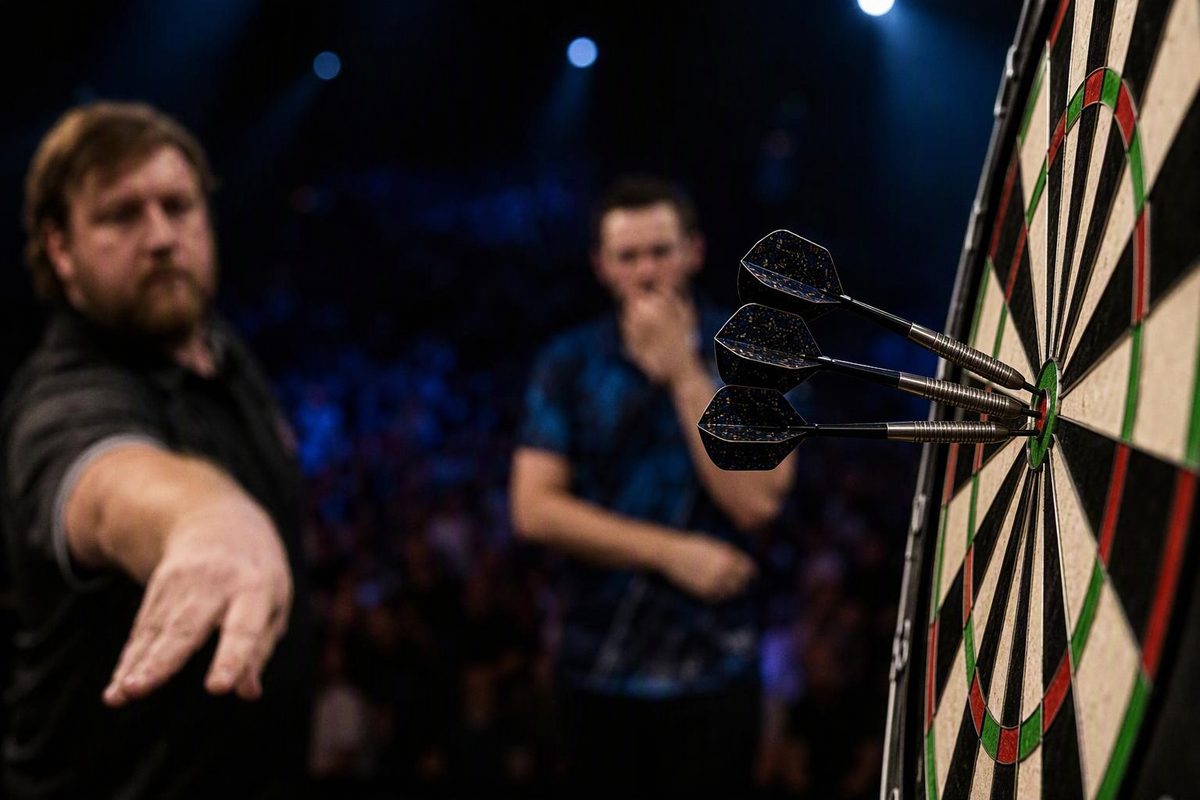
Cameron Menzies hit a match-winning 170 checkout to beat Luke Humphries 10–7 in the first round of the 2026 World Matchplay. The match took place on Monday, 20 July 2026, at the Winter Gardens in Blackpool. It was Menzies’ first victory on that stage, achieved in his second World Matchplay appearance. PDC match report
The finish was treble 20, treble 20, bullseye: the highest possible three-dart checkout in standard double-out darts.
How the 170 checkout works
A checkout is the score a player clears to reach exactly zero and win a leg. Under double-out rules, the final dart must hit a double; the inner bullseye scores 50 and qualifies as a double. PDC Europe rules
Starting with 170 remaining, the route is:
| Dart | Target | Points scored | Score remaining |
|---|---|---|---|
| First | Treble 20 | 60 | 110 |
| Second | Treble 20 | 60 | 50 |
| Third | Inner bullseye | 50 | 0 — leg won |
That is 60 + 60 + 50 = 170, often called the “big fish”. There is no alternative three-dart route to finish 170. Two trebles can contribute at most 120 points, and the bull is the highest-scoring legal finishing double, adding 50. Darts501 checkout guide
This also explains why a 180 is not a checkout: although three treble 20s score more, the last dart is a treble rather than a double.
Why the finish mattered at 9–7
Menzies had led 8–3, but Humphries won four consecutive legs to cut the gap to 8–7. Menzies then took out 98 to move one leg from victory before clearing 170 in the next leg to seal the match 10–7. The final two checkouts stopped Humphries’ comeback rather than simply extending a comfortable lead. PDC match report
There had already been notable finishing from both players. Menzies’ double-double 129 checkout put him 3–2 ahead; Humphries answered with 167 to level at 3–3. Sky Sports report
What the number tells you
A 170 checkout is not a three-dart average, nor does it by itself establish a nine-dart finish. It describes the final visit of one leg, not how quickly the player completed the whole leg or how consistently they played across the match.
For performance analysis, keep highest checkout separate from checkout percentage: one records the biggest successful finish, while the other measures conversion of darts at a finishing double. Menzies’ 170 supplies the highlight; judging his overall finishing requires the wider opportunity count. Our guide to scoring averages versus checkout percentage explains that distinction.