
Forty-Five Is a Pub Player, Sixty Is a League Player, Ninety-Five Is on Television
A three-dart average of 45 is respectable pub darts, 60 is strong league play, 80 is county level, and the TV pros live between 90 and 105. Calibrate yourself here.
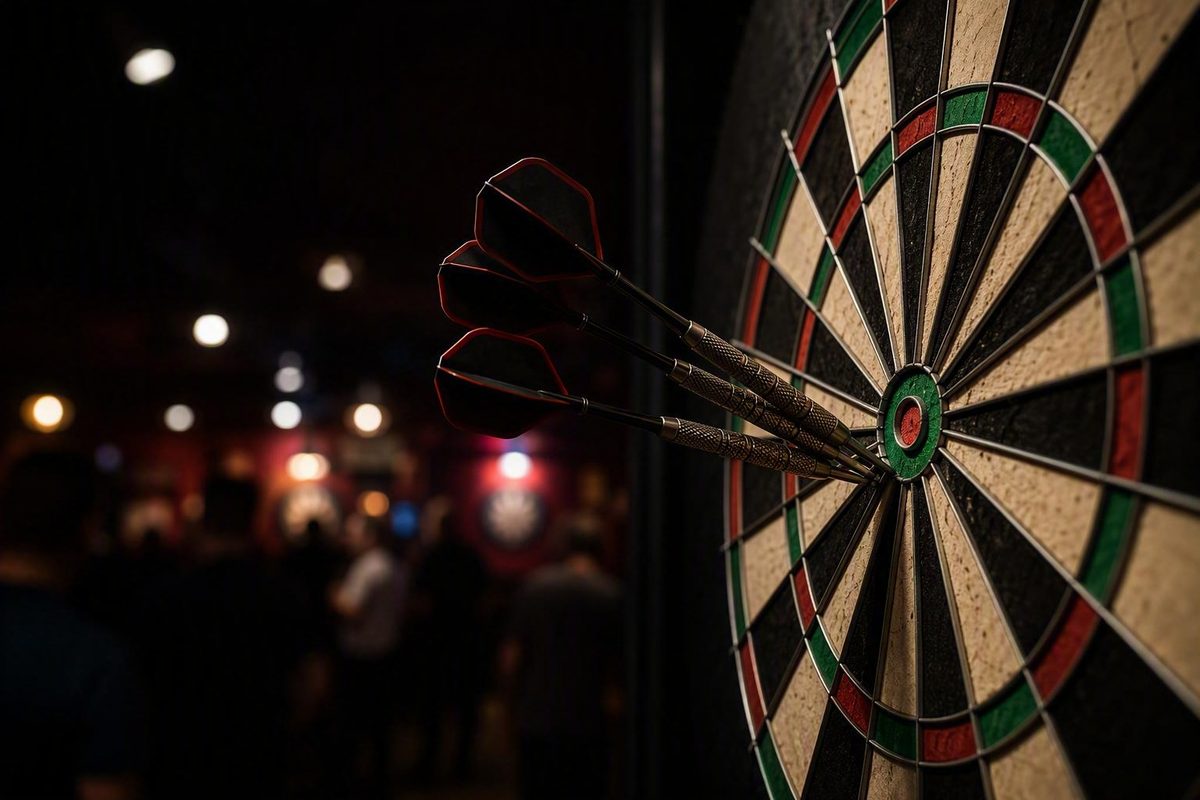
Darts compresses a player’s entire skill into one number faster than any sport: the three-dart average — points scored per turn of three darts, usually measured across 501 legs. Here is how to place any average, including yours, on the real scale.
The bands
- 30–40 — casual: a player who enjoys darts and hits the twenty bed sometimes. A 501 leg takes 25+ turns.
- 45–55 — solid pub standard: consistent scoring, trebles arriving occasionally on purpose. Most “decent” pub players honestly measured live here.
- 60–70 — strong league player: super-league standard, deliberate treble-20 visits, legs closed in 18–20 darts regularly.
- 75–85 — county and top amateur territory; qualifying-circuit players. The treble is now the target, not the bonus.
- 90–105 — professional. PDC tour averages cluster in the mid-90s; televised match averages above 100 mark elite performances. Michael van Gerwen’s 123.40 in 2016 remains the televised record — an average requiring near-permanent treble hitting.
The distances between bands are deceptive: fifteen points of average is roughly the gap between a hobbyist and a league player, and again between the league and the county player. Each fifteen points takes exponentially more practice than the last.
What the average hides
Two players with identical averages can be very different: scoring average ignores checkout percentage — doubles hit per attempt — and legs are won at the double. Professionals convert roughly 40% of checkout attempts; pub players convert under 15%, and the difference decides close legs far more often than the extra treble does. The pub habit of quoting scoring averages while ignoring doubles is how a 60-average player loses to a 55-average player nightly.
Measuring yourself honestly
Play 10 legs of 501 against the ideal (no opponent), record every visit, and divide total points by visits, counting the messy legs too — the ones abandoned from memory are exactly the ones the average exists to count. Apps make this painless now. Whatever the number says, it is the honest starting line, and in darts the number moves with practice as reliably as anywhere in sport: the board never has an off night, and it never rounds up.