
Ross Smith’s 73% Checkout Rate in the Hungarian Final Explained
Ross Smith beat Gary Anderson 8–2 in the 2026 Hungarian final. Decode his rounded 73% checkout rate, implied 8-from-11 tally and 101 average.
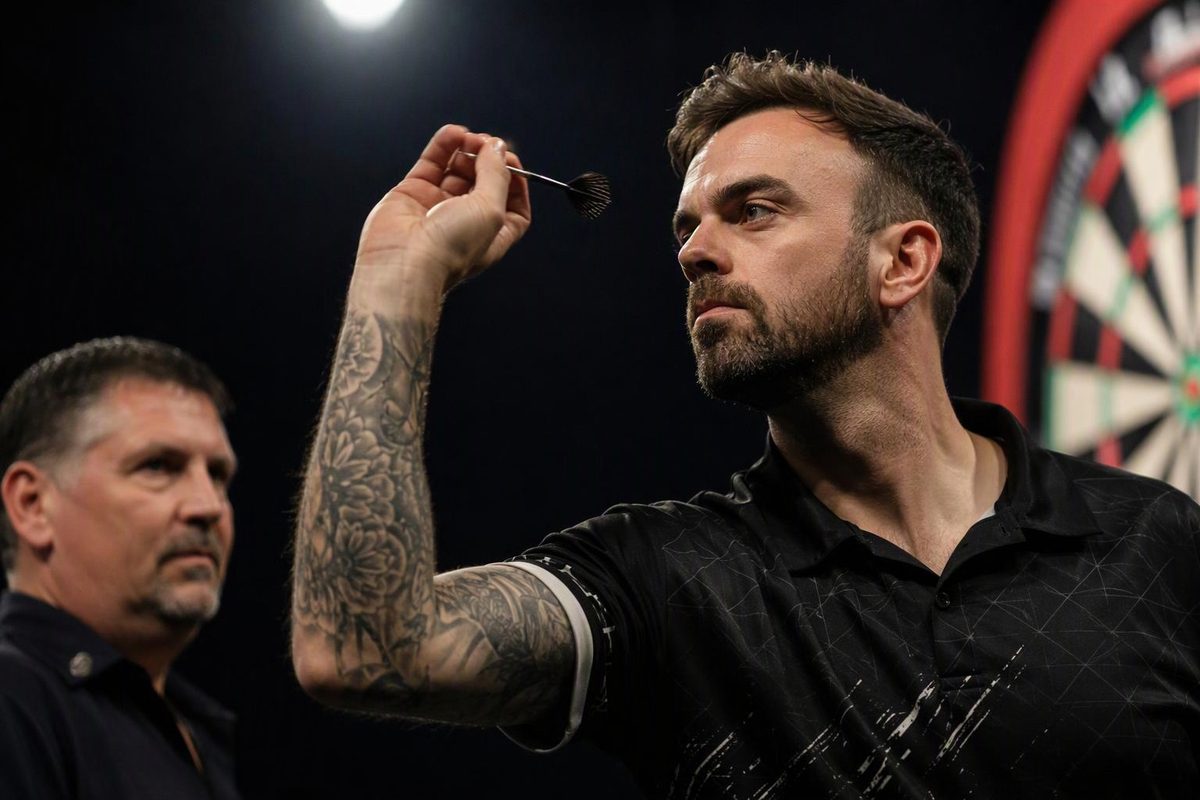
Ross Smith’s 73% checkout rate came in his 8–2 victory over Gary Anderson in the 2026 Hungarian Darts Trophy final, played in Budapest on 30 August. He also recorded a three-dart average of about 101. PDC Europe described his finishing rate as just under 73%; Sky Sports rounded it to 73% and identified it as the proportion of attempts at a double converted. (PDC Europe, Sky Sports)
What the percentage counts
Checkout percentage measures successful finishing darts against attempts to finish:
Checkout percentage = successful finishing darts ÷ attempts at a finishing double × 100.
For a simple worked example, suppose you reach 40 in a 501 leg, miss double 20 twice outside the scoring area, then hit it with your third dart. You have won the leg, but your checkout rate for those attempts is 1 ÷ 3 × 100 = 33.33%. The earlier scoring darts do not enter that calculation.
Smith won eight legs, so he landed eight successful finishing darts. Combined with the reported 73% rate, that implies 11 attempts, giving:
8 ÷ 11 × 100 = 72.727…%, or 72.73% to two decimal places.
That is a calculation from the result and rounded percentage, rather than a separately listed attempt count in the cited reports. It implies just three unsuccessful finishing attempts across the final. (Sky Sports)
It does not mean Smith won 73% of the legs—he won eight of ten, or 80%. Nor does it mean 73% of all his darts hit their intended targets.
How it fitted the 8–2 win
Smith took an early 2–1 lead with checkouts of 103 and 124, moved five legs clear, and completed the win with an 11-dart break of throw, according to Sporting News. PDC Europe records that he led 6–1 before closing out the match. (Sporting News, PDC Europe)
The two headline metrics describe different aspects of that win:
- About 101 three-dart average: his overall points-per-dart pace, expressed per three darts—not simply his scoring before reaching a finish.
- About 73% checkout: how efficiently he converted the finishing attempts he earned.
They are related, not independent: missed doubles add darts without completing the leg and can lower an overall average. Our guide to first-nine average versus checkout percentage explains how to separate opening scoring from finishing more clearly.
A final performance, not a long-term benchmark
The useful sample here is one ten-leg professional final, with an implied 11 finishing attempts. With eight successes unchanged, just one additional miss would have made the rate 8 ÷ 12 × 100 = 66.67%. That sensitivity is why the attempt count matters alongside the percentage.
Treat 73% as a description of Smith’s finishing in this match—not his tournament-wide rate, his usual accuracy, or evidence of a checkout record. For your own pub or league results, record both hits and attempts over multiple matches, then divide the pooled totals rather than taking a simple average of match percentages.