
Why Bunting’s 13–12 Victory Was a Valid Score
Stephen Bunting’s 13–12 win was valid. See how the World Matchplay’s two-clear-legs rule and 12–12 sudden-death cap decided round one.
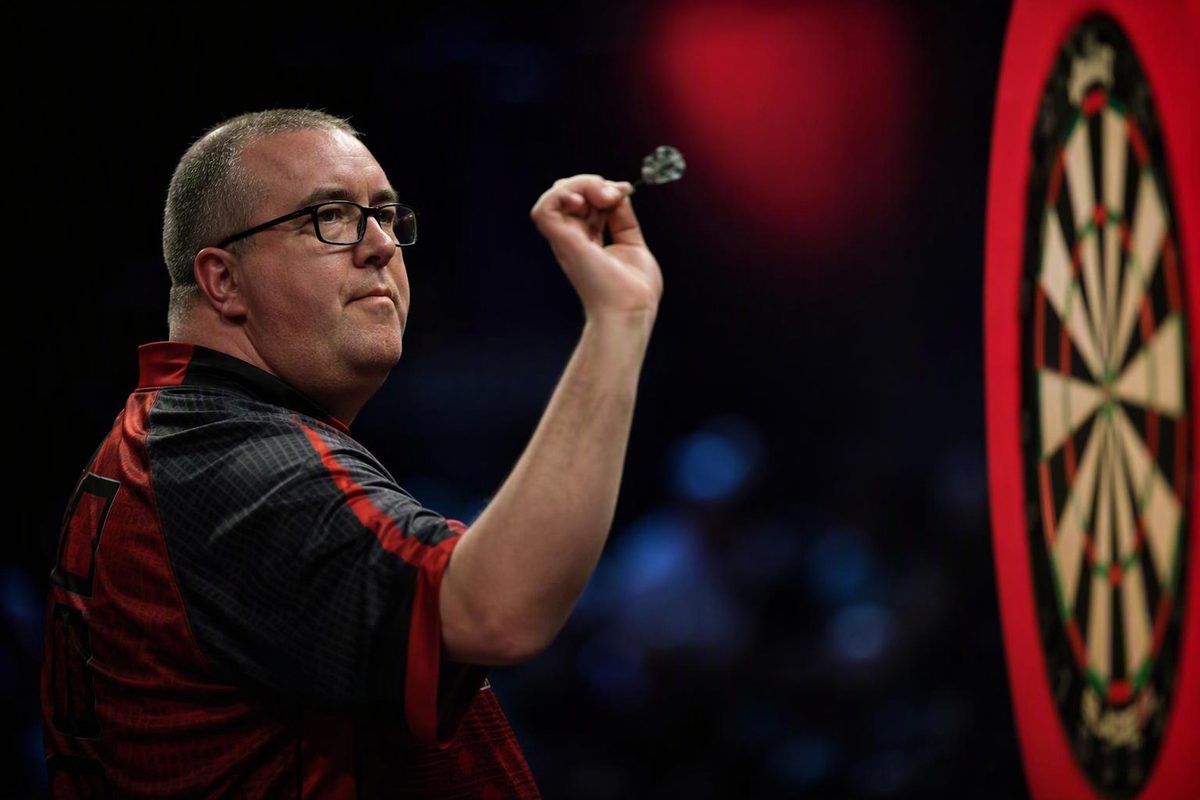
Stephen Bunting’s 13–12 win over Niels Zonneveld on July 18, 2026 was valid under the World Matchplay tiebreak rules. Although the first-round match was listed as best of 19 legs, a player had to reach 10 legs and lead by two. If neither player secured that margin before 12–12, the 25th leg became sudden death and its winner took the match 13–12.
That is why Bunting did not need to finish two legs ahead. The two-clear-legs requirement applied during the extension, but it stopped applying once the match reached its sudden-death cap.
Pick a round to see its normal target, sudden-death score and capped finishing score.
World Matchplay Tiebreak Caps
A two-leg lead is required until 12–12. The next leg produces a capped 13–12 finish.
| Round | Normal Target | Sudden Death At | Capped Finish |
|---|---|---|---|
| Round one | 10 | 12–12 | 13–12 |
| Round two | 11 | 13–13 | 14–13 |
| Quarter-final | 16 | 18–18 | 19–18 |
| Semi-final | 17 | 19–19 | 20–19 |
| Final | 18 | 20–20 | 21–20 |
Source: Sky Sports’ published World Matchplay format. Capped finishes are the listed tie plus its one sudden-death leg.
How Best Of 19 Reached 13–12
In an ordinary best-of-19 match, the first player to win 10 legs wins the match. Nineteen is the maximum number of legs needed when a one-leg margin is sufficient: a 10–9 result uses all 19 scheduled legs.
The World Matchplay added a separate winning condition. Reaching 10 was not enough if the opponent had nine. The leader also needed a margin of two clear legs.
That changed 10–9 from a final score into an unfinished match. Play continued beyond the scheduled distance until one of two things happened:
- A player established a two-leg lead after reaching the target of 10.
- The players reached 12–12, triggering one capped sudden-death leg.
The distinction between the scheduled distance and the absolute maximum is the key to the 13–12 score. “Best of 19” established the normal target. It did not mean that the match was forbidden from passing its 19th leg under the event’s tiebreak procedure.
The first-round stopping points worked as follows:
| Score | Match Ends? | Reason |
|---|---|---|
| 10–8 | Yes | Target reached with a two-leg lead |
| 10–9 | No | Lead is only one leg |
| 11–9 | Yes | Two-leg lead established |
| 11–10 | No | Lead is only one leg |
| 12–10 | Yes | Two-leg lead established |
| 12–11 | No | Lead is only one leg |
| 12–12 | No | Sudden-death leg must be played |
| 13–12 | Yes | Sudden-death winner takes the match |
Sky Sports’ published format listed round one as first to 10, with sudden death at 12–12. The later rounds used the same principle with higher target and cap scores: sudden death at 13–13 in round two, 18–18 in the quarter-finals, 19–19 in the semi-finals and 20–20 in the final (Sky Sports).
The Two-Clear-Legs Rule Had A Limit
“Win by two” can describe an uncapped format in which play continues indefinitely until somebody opens a two-leg lead. That was not the World Matchplay arrangement used here. Its extension had a defined endpoint.
At 10–9, the leader had reached the normal target but was only one leg ahead. A win in the next leg would make the score 11–9 and end the match. If the trailing player instead levelled at 10–10, both players remained in contention.
The same test then applied to later scores. A player could win 12–10 because that was a two-leg margin. A 12–11 lead was not sufficient. If the trailing player won the next leg to make it 12–12, the match did not wait for somebody to lead 14–12 or 15–13. It moved to the capped decider.
This produces two different winning conditions within the same match:
- Before 12–12, a player must have reached at least 10 legs and be two legs ahead.
- At 12–12, the winner of the next leg wins the match regardless of the one-leg final margin.
The second condition is an exception created by the cap. It prevents the two-clear-legs extension from continuing without a fixed maximum.
Sporting Life described the format as requiring two clear legs, allowing five additional legs and making the sixth additional leg sudden death (Sporting Life).
Those additional legs are counted from the scheduled best-of-19 distance. Leg 19 can leave the score at 10–9. The next five legs—legs 20 through 24—can take the players through the extension and produce 12–12. Leg 25 is the sixth additional leg and the sudden-death decider.
That makes 13–12 the highest possible first-round finishing score under this format. It is not a conventional best-of-25 match: the players do not begin with a first-to-13 target. The score can reach 13–12 only after the original first-to-10 condition and the two-clear-legs extension fail to produce a winner.
What Happened In The Bunting–Zonneveld Decider
Bunting led 8–5 before Zonneveld fought back. That score was still below the normal target, so no tiebreak condition was involved at that point. The decisive rules became relevant only once the match remained close around and beyond the first-to-10 threshold.
Late in the match, Zonneveld missed three match darts. Bunting then checked out 118 to force the deciding leg. He broke throw in that final leg to complete the 13–12 victory, according to Sky Sports’ match report.
The 118 checkout did not itself win the match. It kept Bunting in it and took the score to the point at which the capped decider was required. Once the players were level at 12–12, the next leg had a simpler condition: win that leg and win the match.
Bunting therefore finished with 13 legs to Zonneveld’s 12. The one-leg margin was legal because it came in sudden death. Had the same one-leg margin existed earlier—10–9, 11–10 or 12–11—the match would have continued.
Sudden Death Changed The Match Condition, Not 501
The phrase “sudden death” referred to the match result, not to a different way of scoring the individual leg. The deciding leg still used normal 501 double-out rules. Each player scored down from 501 and had to reach exactly zero on a double.
The usual bust rules also continued to apply. Our guide to 501 darts rules explains the scoring, checkouts and bust conditions inside a leg.
What changed was the value of winning that leg. During the two-clear-legs extension, a single leg might create only a one-leg lead and leave the match unfinished. In sudden death, that one leg settled the match immediately.
This separates three concepts that can otherwise be conflated:
- Leg scoring: Both players start an individual leg from 501 and finish on a double.
- Normal match target: In round one, the first player to 10 is in a position to win.
- Tiebreak condition: The player must be two clear unless the score reaches 12–12, when one final leg decides the match.
Nothing about a 13–12 match score changes the points Bunting or Zonneveld needed to score within any one leg. It only records how many legs each player won before the match condition was satisfied.
Why 10–9 And 13–12 Were Treated Differently
Both 10–9 and 13–12 are one-leg margins, but they occur under different parts of the format.
At 10–9, the scheduled 19 legs have been completed, but the two-clear-legs requirement remains active. The leader has reached the target but has not met the margin condition. Another leg is necessary.
At 13–12, the players have already reached 12–12 and played the designated sudden-death leg. The cap has replaced the two-leg-margin requirement with a final one-leg shootout. No further extension is available or required.
A useful way to read the progression is to test the score in order:
- Has either player reached at least 10 legs?
- If so, is that player two legs ahead?
- If not, has the match reached 12–12?
- If it has, the winner of leg 25 wins 13–12.
That sequence also explains why 11–9 and 12–10 are valid finishing scores. The winner is above the original target and has obtained the required two-leg margin before the cap. By contrast, 11–10 and 12–11 fail the margin test, so neither can be a final score in this first-round format.
The Same Structure Applied In Later Rounds
The published World Matchplay format kept the two-clear-legs principle for later rounds but moved the targets and sudden-death caps. Round two could reach 13–13 before its decider. A quarter-final could reach 18–18, a semi-final 19–19 and the final 20–20.
The corresponding capped finishing scores are one leg beyond those ties: 14–13 in round two, 19–18 in a quarter-final, 20–19 in a semi-final and 21–20 in the final. These scores follow directly from playing one sudden-death leg after the listed tie.
A high final score therefore cannot be interpreted without knowing the round. A 13–12 score was the capped result for Bunting and Zonneveld because they were playing in round one. The same numbers would not represent the sudden-death endpoint in a later round with a higher scheduled target.
The event’s round label, normal target and tiebreak cap belong together. “Best of 19” answers how many legs the first round was scheduled to contain under an ordinary one-leg-margin finish. The two-clear-legs rule explains why play could extend beyond 19. The 12–12 cap explains why the extension stopped with a 25th and final leg.